Minestrone Soup
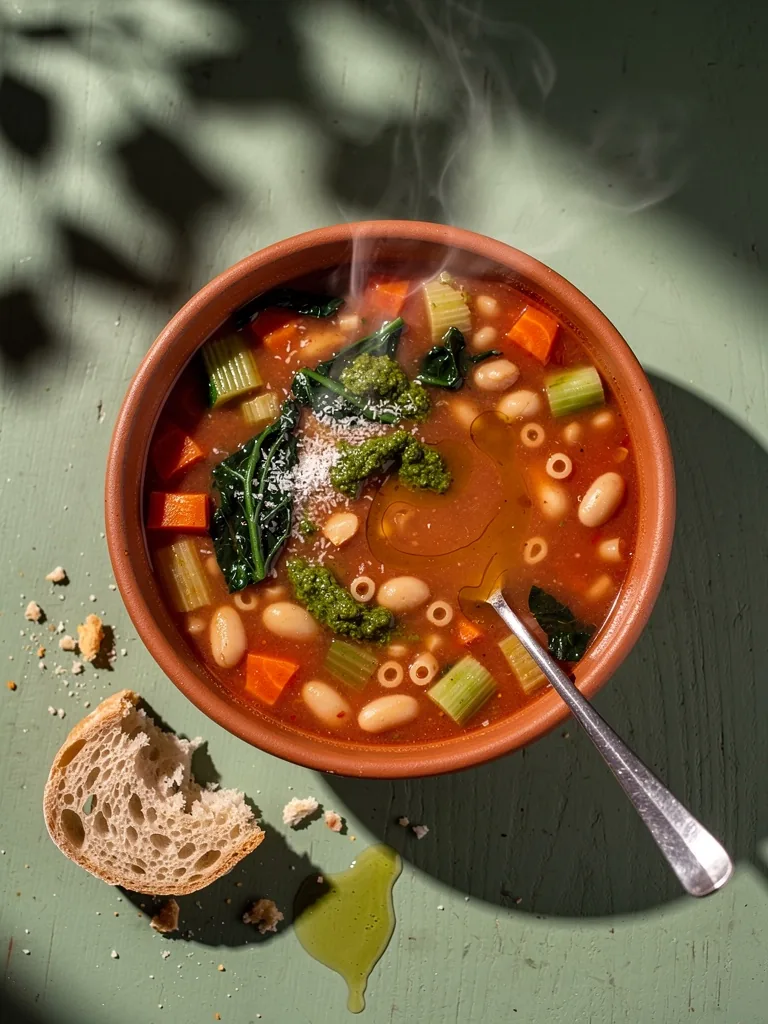
Classic minestrone soup is Italy's answer to a full vegetable drawer, and whether a bowl tastes deep and savoury or like hot vegetable water depends on order, not ingredients. Minestrone simply means "big soup": there is no single correct recipe, and every version shifts with the season. What the good ones share is technique: flavour built in layers, and vegetables added by cooking time, so the potato is tender, the courgette holds its shape and the cavolo nero stays green. Save it for the first properly cold week.
The one thing that makes it work: building flavour in layers
With no meat or bones to lean on, minestrone builds its depth in three layers.
A slow soffritto. Onion, carrot and celery cook gently in olive oil for 12-15 minutes, softening right through rather than browning outside. As cell walls weaken they release water and sugars, the onion's stored fructose chains partly break down into simpler sugars, and the sulphur compounds that make raw onion sting are driven off. Many flavour compounds dissolve in fat — watch the oil turn orange with the carrot's beta-carotene — so the oil carries them through the pot. High heat gives scorched edges, raw centres and bitter garlic.
Fried tomato paste. Dense with sugars and amino acids, paste browns fast: two or three minutes in hot oil, until brick red, adds caramelized, Maillard depth and removes its metallic edge.
A Parmesan rind adds the savoury depth of a meat stock. Then the vegetables follow a schedule: hard first, soft later, greens last.

Ingredients
- Soffritto
- 3 tbsp (45 ml) extra-virgin olive oil, plus more to finish
- 1 large onion (about 200 g · 1 1/4 cups diced)
- 2 medium carrots (about 150 g · 1 cup diced)
- 2 celery sticks (about 100 g · 3/4 cup diced)
- 2 garlic cloves, finely chopped · 1 tsp fine salt, plus more to taste
- 2 tbsp (30 g) double-concentrated tomato paste
- Broth
- 1 tin (400 g) chopped tomatoes
- 1.5 litres vegetable or light chicken stock (6 cups)
- 1 Parmigiano-Reggiano rind, about 8 × 5 cm (40-60 g)
- 1 bay leaf · 2 sprigs fresh thyme
- Vegetables, in order
- 1 medium waxy potato (about 200 g · 1 1/3 cups cubed)
- 150 g green beans, cut into 2 cm pieces (1 1/2 cups)
- 1 medium courgette/zucchini (about 200 g · 1 1/2 cups cubed)
- 1 tin (400 g) cannellini beans, drained and rinsed (240 g · 1 1/2 cups)
- 150 g cavolo nero, stems removed (about 4 cups shredded)
- To serve
- 100 g ditalini or other small soup pasta (scant 1 cup)
- 4-6 tbsp basil pesto · grated Parmigiano-Reggiano · black pepper
How to make it, and why each step matters
- Dice evenly. Soffritto vegetables 5 mm, potato and courgette 1 cm. Even pieces cook at the same rate.
- Sweat the soffritto, 12-15 minutes. Warm the oil in a heavy 5-litre pot over medium-low heat. Add the onion, carrot, celery and salt and cook, stirring often, until soft and glossy with barely any colour; add the garlic for the last minute, as it burns fast. The salt draws out moisture so the vegetables soften rather than fry.
- Fry the tomato paste. Push the vegetables aside and stir the paste in the oil for 2-3 minutes until brick red and just catching — this browns its sugars.
- Add liquid, rind and potato. Pour in the tomatoes and stock, scraping the base. Add the rind, bay, thyme and potato and simmer gently, partly covered, for 15 minutes — the potato needs the longest. Stir now and then so the softening rind doesn't stick.
- Green beans and courgette, 8-10 minutes. Firm enough to need time, soft enough to collapse if cooked as long as the potato.
- Cannellini, 5 minutes. Already cooked, they only need heating; mash a ladleful against the pot to thicken the soup.
- Cavolo nero last, 5-7 minutes. Stir in the shredded leaves and stop while they are tender but still dark green.
- Cook the pasta separately in well-salted water until al dente, then toss with a little oil. In the pot, pasta drinks the broth and clouds it with starch.
- Finish in the bowl. Remove the rind and herbs; taste before salting. Spoon pasta into bowls, ladle the soup over and top with pesto, olive oil and Parmesan — off the heat, their fresh aromas survive.

What a Parmesan rind actually adds
Parmigiano-Reggiano ages for at least 12 months while enzymes break its proteins into free amino acids, including glutamic acid — aged Parmesan has one of the highest free-glutamate levels of any everyday food. The rind is the same cheese, dried hard. Simmered for half an hour, it softens and releases glutamate and salt, so season only once it is out. It adds a little body too: not gelatin, since cheese has no collagen, but softened milk protein and fat. These rinds carry no wax and are edible. Parmesan uses animal rennet, so vegetarians can use a vegetarian hard-cheese rind or white miso.
Why the vegetables go in one by one
Heat softens vegetables by breaking down pectin, the glue between their cell walls. A 1 cm potato cube needs 15-20 minutes; watery courgette is tender in five to eight and collapses after that. Acid slows pectin breakdown, so in tomato broth potato and carrot take longer than in plain water — one more reason they go in first.
Greens run on their own clock. Cavolo nero briefly brightens as trapped air escapes, but prolonged heat and the tomatoes' acid replace the magnesium in chlorophyll with hydrogen, forming olive-drab pheophytin. The finish follows the same logic: basil's scent comes from volatile compounds such as linalool and eugenol, and good olive oil's grassy notes fade with heat too — so both go into the bowl, not the pot.

Troubleshooting: what goes wrong and how to fix it
- Thin, like vegetable water: usually under-salted, or the soffritto was rushed. Salt properly, simmer 10 minutes more with the rind, add pesto.
- Mushy vegetables: added all at once or boiled hard. Follow the order at a gentle simmer.
- Khaki greens: cooked too long. Add them last; reheat only portions.
- Too salty: rind, stock and cheese all add salt. Dilute with water and season only at the end.
Pasta, storage and reheating
Stored in the soup, pasta keeps absorbing liquid and shedding starch until minestrone becomes stew, so keep it separate. Serving the whole pot at once? Cook the pasta in the soup for its last 8-10 minutes with an extra 250 ml (1 cup) of stock.
- Fridge: cool within 2 hours; keeps 4-5 days airtight.
- Freezer: without pasta, up to 3 months; the potato softens slightly. Thaw overnight in the fridge.
- Reheating: beans and potato keep absorbing broth, so add a splash of water and bring back to a simmer. Pesto goes in fresh — leftovers suit a chicken pesto pasta salad.
Beans, seasons and a note for European kitchens
Tinned or dried beans? Tinned cannellini need only five minutes. Dried beans turn creamier: soak 100 g (about one tin's worth cooked) overnight in water with 1 tablespoon of salt per 2 litres, which softens the skins, cook separately for 45-90 minutes and add at step 6 with a splash of their liquid.
Seasons: autumn brings squash, savoy cabbage and leeks; summer brings green beans, courgette, peas and fresh borlotti. Keep the soffritto, rind and order the same.
For European kitchens: cavolo nero is Schwarzkohl or Palmkohl in Germany; kale (Grünkohl) or savoy (Wirsing) can stand in, while spinach goes in for the last minute only. Cannellini are simply weiße Bohnen, and small soup pasta such as Hörnchennudeln replaces ditalini. Ask the cheese counter for Parmesan rinds (Parmigiano-Reggiano Rinde) or save your own in a freezer bag — they keep for months and go into the pot frozen.
Made it? Save the recipe to your lunch board for the next big-pot-of-soup week.
Save to PinterestFAQ
- Should you cook the pasta in minestrone soup?
- Only if the whole pot will be eaten at once. Otherwise cook it separately and add it to each bowl, or leftovers turn mushy.
- Can I make minestrone without a Parmesan rind?
- Yes. Stir in 30 g grated Parmesan at the end, or a teaspoon of white miso for a vegetarian version.
- Can you freeze minestrone soup?
- Yes, for up to 3 months without the pasta. Add a splash of water when reheating and cook fresh pasta.
- Which vegetables go in minestrone?
- Onion, carrot and celery form the base; then whatever is in season, added by cooking time.
Pin Crafts Food recipes are researched and developed with the help of AI tools and carefully reviewed and edited by Mara Linden for accuracy, clarity and real-kitchen practicality.